
WHAT WE OFFER
We focus on the exploration and supply of high-purity rare earth minerals and associated critical metals used in high-tech and green technologies:
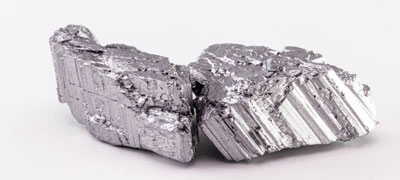
Essential for permanent magnets used in electric vehicles and wind turbines.
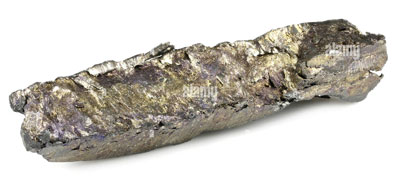
Used in high-strength magnets, alloys, and advanced aircraft engines.
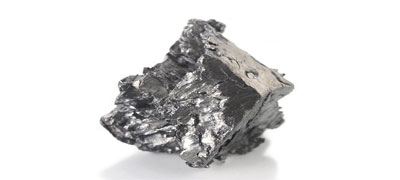
Improves heat resistance in magnets used in high-performance motors.
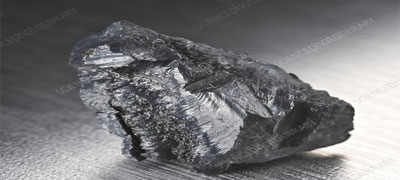
Key component in batteries, optical lenses, and catalyst systems.
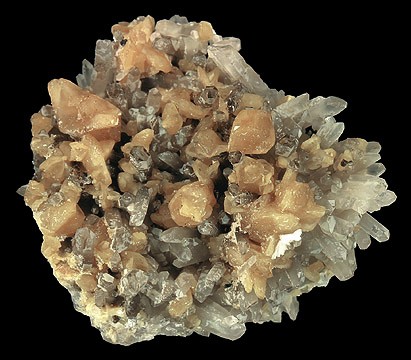
Our primary sources of rare earth elements, refined to high-grade standards.
India is moving aggressively to build a self-reliant rare earth ecosystem — spanning exploration, mining, processing, and manufacturing for high-tech applications like EVs, defense systems, and renewable energy infrastructure. National Critical Mineral Mission (NCMM) Launched in January 2025 with a budget of ~₹16,300 crore aimed at critical minerals, including REEs. It targets end-to-end development: exploration, mining, beneficiation, processing and recycling through policies, auctions, R&D and incentives.
PLI & Magnet Manufacturing Schemes:- A Production Linked Incentive (PLI) style scheme with ~₹7,300–7,350 crore has been approved to scale up rare earth permanent magnet production — vital for EV motors and wind turbines. Goal: establish integrated rare earth magnet capacity of ~6,000 tpa and reduce dependence on imports.
1. Policy Reforms for Enhanced Exploration Auction of rare earth / critical mineral blocks has been underway. Simplified licensing and regulatory changes under the MMDR Act are enabling more private sector participation.
2. India’s Domestic Resource Base Significant Deposits Across Multiple States India holds approximately 8.5 million tonnes of rare earth oxide resources (REO), largely in monazite sands and hard-rock deposits. Coastal and beach sands in Andhra Pradesh, Odisha, Kerala, Tamil Nadu, West Bengal, Jharkhand, Gujarat & Maharashtra contain REEs. Hard rock deposits in Gujarat & Rajasthan also contribute. Despite big reserves, India currently contributes < 1% of global rare earth production — far below potential. Public Sector Exploration & Production IREL (India) Ltd. under Department of Atomic Energy remains the core producer. It has expanded capacity especially at Odisha and Kerala. Private players are now entering downstream domains such as magnet and alloy production.
3. Geopolitical Moves & International Deals Diversifying Supply Chains India is actively pursuing multiple international avenues to secure REEs: Myanmar exploration efforts — samples being sourced from Kachin areas, though geopolitical risks are involved. Negotiations with Latin American suppliers (Chile, Peru) to supplement supplies. Partnerships with African nations on rare earth procurement and technology cooperation. Discovery Alert Strategic Partnerships Analysts suggest India could become a third pillar alongside the US & Japan in forming a diversified rare earth supply chain outside China.
4. Industrial & Economic Impacts Industry Voices & Investment Calls Leaders like Sajjan Jindal (JSW Group) have publicly urged faster rare earth exploration and domestic value-chain growth. Manufacturing & EV Sector Impacts Rare earth shortages — especially after China’s export controls — were cited as problematic for EV and renewable sectors. Calls for Global Collaboration Experts are urging India to form stronger global partnerships (e.g., with Japan, US, UK) to build a competitive processing ecosystem.
5. Challenges & Constraints Dependence on China, China still dominates ~70–90% of global mining, refinement, and magnet production. India must overcome this strategic dependence. Processing & Refining Gaps India’s biggest bottleneck is in processing and refining capacity, not just raw material deposits. Investment in downstream technologies is a priority. Technical / Geological Issues Some Indian deposits are low-grade or complex (including radioactive monazite requiring careful handling), making cost-efficient extraction challenging.
Summary: Where India Stands Today (2025) Big resource base — ~8.5 Mt of rare earth oxide potential. National mission underway to secure critical minerals. Significant policy incentives for domestic magnet manufacturing. Global supply diversification being pursued. Processing & refining infrastructure still developing — far behind China. Production levels remain small compared to global leaders.
China’s New Rare Earth and Magnet Restrictions Threaten U.S. Defense Supply Chains
Mulberry Industries, Ramaco Resources enter rare earth off take MOU for Brook mine
Electrification and Robotics to Drive Future Rare Earth Magnet Demand
1. Supply Chain & Geopolitics: China Still Dominant, But Shake-ups Underway
China is tightening export controls on rare earths and magnets — expanding restrictions even to trace Chinese content in products — pushing global supply chains to scramble for alternatives.
Supply concentration remains a major issue, with Western buyers still wary of China’s restrictions even after diplomatic negotiations.
China’s rare earth mineral market continues to grow, with projected steady expansion through 2032.
Export patterns are shifting — some permanent magnet exports to the EU have increased even as tensions rise elsewhere.
Key takeaway: China remains pivotal, but markets are diversifying due to strategic risk and policy pressure.
2. New Mining & Processing Projects (Domestic Production Moves)
Brook Mine (Wyoming) — First rare earth mine in the U.S. in 70+ years; pilot processing is underway, which could help reduce U.S. dependence on imports.
Heavy rare earth oxides (like dysprosium) produced in the U.S. now qualify for use in permanent magnets — a major step toward local content in advanced magnets.
Governments and companies worldwide — including Japan, the U.S., Europe, and India— are actively investing in on-shore processing and magnet facilities to cut reliance on foreign supply chains.
Why it matters: Rare earth refining and magnet manufacturing are critical chokepoints — not just raw mining.
3. India’s Major Push into Magnet & Rare Earth Production
The Government of India approved a ₹7,280 crore (~US$815 million) scheme to build a 6,000 tpa integrated rare earth permanent magnet (REPM) manufacturing value chain — from oxides → metals → alloys → finished magnets.
This is India’s first end-to-end strategic magnet initiative, aimed at supporting EVs, renewable energy, aerospace, defense, and electronics sectors.
The scheme includes incentives and capital subsidies to attract global and domestic players.
Impact: A big step toward reducing import dependence and strengthening India’s positioning in global critical materials supply chains.
4. Market & Demand Trends Rapid demand growth for rare earth magnets across EVs, wind turbines, robotics, automation, and consumer electronics — with demand projected to grow significantly by 2035–2036. The global NdFeB permanent magnet market (the strongest class widely used today) is forecast to nearly double in value over the coming decade. Drivers: Renewable energy expansion, electrification of transport, robotics, automation, and defense technology.
5. Technology & Materials R&D Heavy-rare-earth-free magnets: Recent commercial developments include high-performance magnets without heavy rare earths — lowering dependence on scarce elements and improving heat resistance. International science forums (like REPM2025) are focusing on advanced permanent magnet science, manufacturing, life-cycle sustainability, and recycling. Fundamental research continues on rare-earth-free magnets using alternative materials (e.g., Fe-N alloys, ferrites, nanostructures) to reduce reliance on critical elements like neodymium or dysprosium — though commercial adoption is still emerging. Tech trend: Balancing high performance with sustainability and resource independence.
6. Recycling & Secondary Supply There's growing industry interest in recycling permanent magnets from e-waste and end-of-life products, as a way to alleviate raw material pressure — though commercial recycling at scale is still in early stages of development.
Long-term potential: Circular supply chains reducing reliance on primary mining. Summary: What’s New in 2025–2026
Trend / Development Area
Supply & geopolitics China tightens controls; global supply diversification
Mining & processing New mines (e.g., Wyoming), U.S./Europe/India processing builds
India initiatives ₹7,280 cr REPM program to build domestic magnet industry
Market outlook Strong growth driven by EVs, wind, robotics
Technology Heavy-rare-earth-free magnets and advanced research Recycling Increasing focus but still nascent.
 203, Aziz Avenue, VP Road, Vile Parle (W) Mumbai 400056
  contact@skcreml.com
  022-26100787